
Guide
Dinner party games for adults: eight that work at the table
Most lists of dinner party games are written for a rented hall: thirty games, half of them need a projector, and the rest need the guests to leave the table, which is the one thing a dinner party guest does not want to do.
This is a shorter list. Every game on it works at the table and does not put one guest on the spot while the rest of the table watches. Most need nothing but the people. The last one is the game the table is already set up for.
What a dinner party game has to do
A dinner party game has three jobs. It has to work sitting down, because people came to eat and talk. It has to give everyone something to do at the same time, so nobody is watching one guest perform. And it has to end when the host wants it to, not when the rules say so. Drinking games fail the last one; they end the evening early. Everything below passes, and most of it needs nothing but a pen.
Eight games that pass
1. Two Truths and a Lie
Needs nothing. Play it with the first drink.
Each guest tells the table three things about themselves, one of them false, and the table votes on the lie. It is at its best with people who have just met and falls flat with friends of twenty years, so play it while the last guests are still arriving.
2. The sticky-note Name Game
Needs sticky notes and a pen. Play it running all evening.
Write a famous name on a note and stick it to the forehead of the person next to you. Everyone asks yes-or-no questions until they work out who they are. It runs in the background all night: a guest asks a question whenever the conversation lulls, and nobody has to stop eating.
3. Categories
Needs nothing. Play it between courses.
Pick a category (wine farms, Springbok captains, things you find in a braai kit), go round the table, and the first person to repeat an answer or hesitate is out. It is fast, loud and over in five minutes, which is exactly the length of the gap between courses.
4. Would You Rather
Needs nothing. Play it with the first drink.
One guest asks “would you rather…” and everyone has to answer and defend it. The defending is the game. Keep the questions clean enough for the in-laws at the end of the table, and the shy guests join in too, because there is no wrong answer.
5. Name That Tune
Needs a phone and a speaker. Play it after dessert.
Play the first three seconds of a song; the first to name it takes the point. Pick decades to match the table. It is loud, so it goes after the main course, not during it.
6. Fishbowl
Needs paper, pens and a bowl. Play it after dessert.
Everyone writes five names on slips and drops them in the bowl. In two teams, each player gets a minute to get their side to guess as many slips as they can: round one with any words, round two with one word, round three by acting alone. The slips go back in between rounds, so the third round is funnier than the first. People end up on their feet, so keep it for after dessert.
7. Murder mystery
Needs a kit, a fixed guest list and homework. Play it the whole evening.
Everyone gets a character in advance and turns up in it, and the plot runs through the courses. When it lands, it is the whole evening. When one guest hates acting, it lands on them. There are South African kits, so it is a real option, but it is the one game on this list you cannot decide on at six o’clock.
8. A blind wine tasting
Needs the wine you were opening anyway, and a sock per bottle. Play it through the main course.
Hide the labels, pour a small taste of each wine, and everyone guesses what is in the glass: the grape, where it is from, what it costs. Then the reveal, one bottle at a time, with the table arguing before the sock comes off. Everyone plays at once, nobody stands up or acts, and the points come from guessing, not drinking. It is the one game on this list the table is already set up for.
Why the wine game wins the evening
It happens in the seat you were already in, with the glass you were already holding. Nobody is put on the spot: each guest guesses in private, and the reveal does the theatre. The friend who reads wine lists for fun and the friend who orders “the red one” start level, because nobody has seen a label. And it fills exactly the gap you want it to: about 20 minutes a bottle, so two wines is a relaxed 45 minutes and three is close to an hour, or stretch it across the whole dinner.
If you want to run it yourself, the host guide has the whole method: how many wines, how to hide the labels, what to ask and how to score it. The short version: take the foil off the neck, cover the bottle, number it, and write the answers down where nobody can see.
The same trick works on chips, chocolate, coffee and beer: the tasting games guide has seven blind taste tests and the rules that keep them fair.
Which game, when
| With the first drink | Two Truths and a Lie, Would You Rather |
|---|---|
| Between courses | Categories. The Name Game runs underneath everything. |
| Through the main course | A blind tasting, or a murder mystery if you planned it. |
| After dessert | Name That Tune, Fishbowl |
Or let the box do the hiding
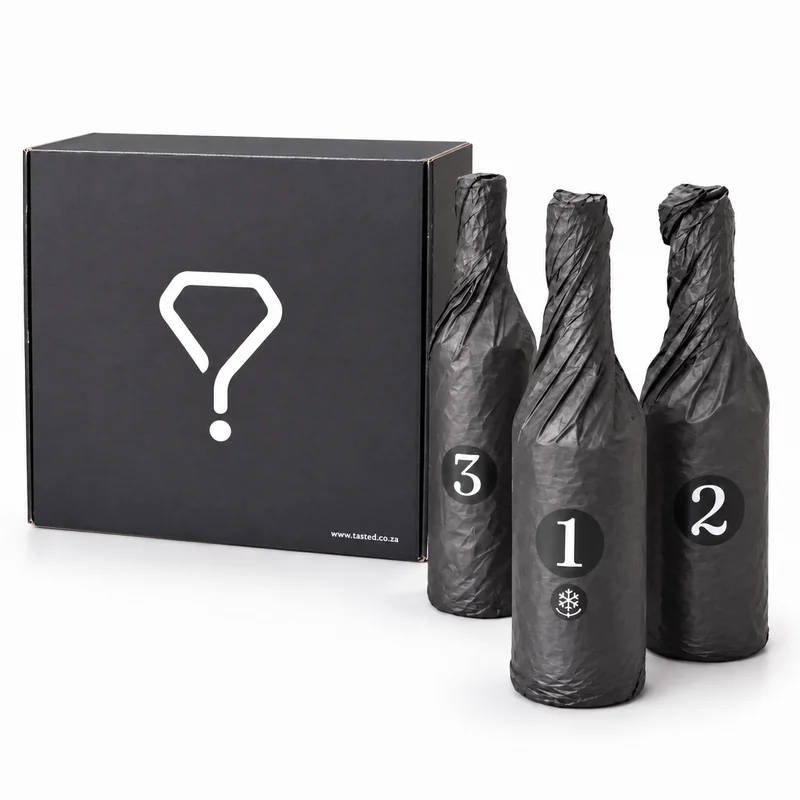
A Tasted box is the blind tasting with the admin done. Sealed, numbered mystery wines come in the box with a QR code to join. Everyone joins the game on their own phone with the QR or the game code, no app to download, and the reveal, the scoring and the winner happen on screen. The Discovery Box has two wines, the Premium and Reserve boxes have three, and one box is made for 2 to 10 players. Boxes start at R365. Delivery is R65 across South Africa, free on orders over R1000.
Not sure what you like? The quiz is nine questions and points you to a South African bottle you would never have picked yourself.
Playing it at the office? The team building guide covers boxes per head count and cost per person.
Questions dinner party hosts ask
What is a good dinner party game for adults that is not a drinking game?
A blind wine tasting. The wine is already on the table, every guest plays at once, and the points come from guessing what is in the glass, not from drinking. A tasting pour is small.
How many people do you need for a dinner party game?
Three is enough for Two Truths and a Lie, and most games on this list are at their best between four and ten. One blind tasting box is made for 2 to 10 players, from a couple on date night to a full table.
When in the evening should you play a game?
Talking games suit the first drink, while people are still arriving. A blind tasting or a murder mystery runs through the main course. Anything that needs people on their feet, like Fishbowl or Name That Tune, waits for after dessert.
Do dinner party games need props?
Most need nothing, or a pen and paper. A blind tasting needs a sock or a paper bag per bottle to hide the label, or a box of mystery wines that arrives already sealed and numbered.
How long does a blind wine tasting take at a dinner party?
About 20 minutes per bottle. Two wines is a relaxed 45 minutes, three is closer to an hour, and plenty of tables stretch it across the whole dinner. The host sets the pace.
Do guests need to know anything about wine?
No. Nobody sees a label until the reveal, so the friend who reads wine lists for fun and the friend who orders the red one start level. The questions are about what you can see, smell and taste.