
Guide
How to host a blind wine tasting at home
A blind tasting is a wine evening with the labels hidden. Nobody knows what is in the glass until the reveal, so the friend who reads wine lists for fun and the friend who orders “the red one” start level. It turns wine into a game instead of a lecture.
You do not need to know wine to host one. You need a few bottles, something to hide them in, a way to keep score, and people. Here is the whole thing, in order.
1. Pick the wines: two or three is plenty
Two or three wines fill an evening. Each bottle is a round of about 20 minutes once everyone has tasted, argued and locked in a guess, so three bottles is roughly an hour of play. Most guides stop at four to six, because palates tire and guesses get lazy.
Mix them. One white and one red is the classic pair. With three, add a second red from a different grape, or put a Chenin Blanc against a Sauvignon Blanc so there is a real difference to find: Sauvignon smells of cut grass, Chenin of ripe pear and apricot. South Africa makes this easy. Chenin, Pinotage, Swartland Syrah and Stellenbosch Cabernet all taste like themselves.
Spread the prices. A R100 bottle next to a R200 bottle gives the guess-the-price round something to argue about.
2. Hide the labels properly
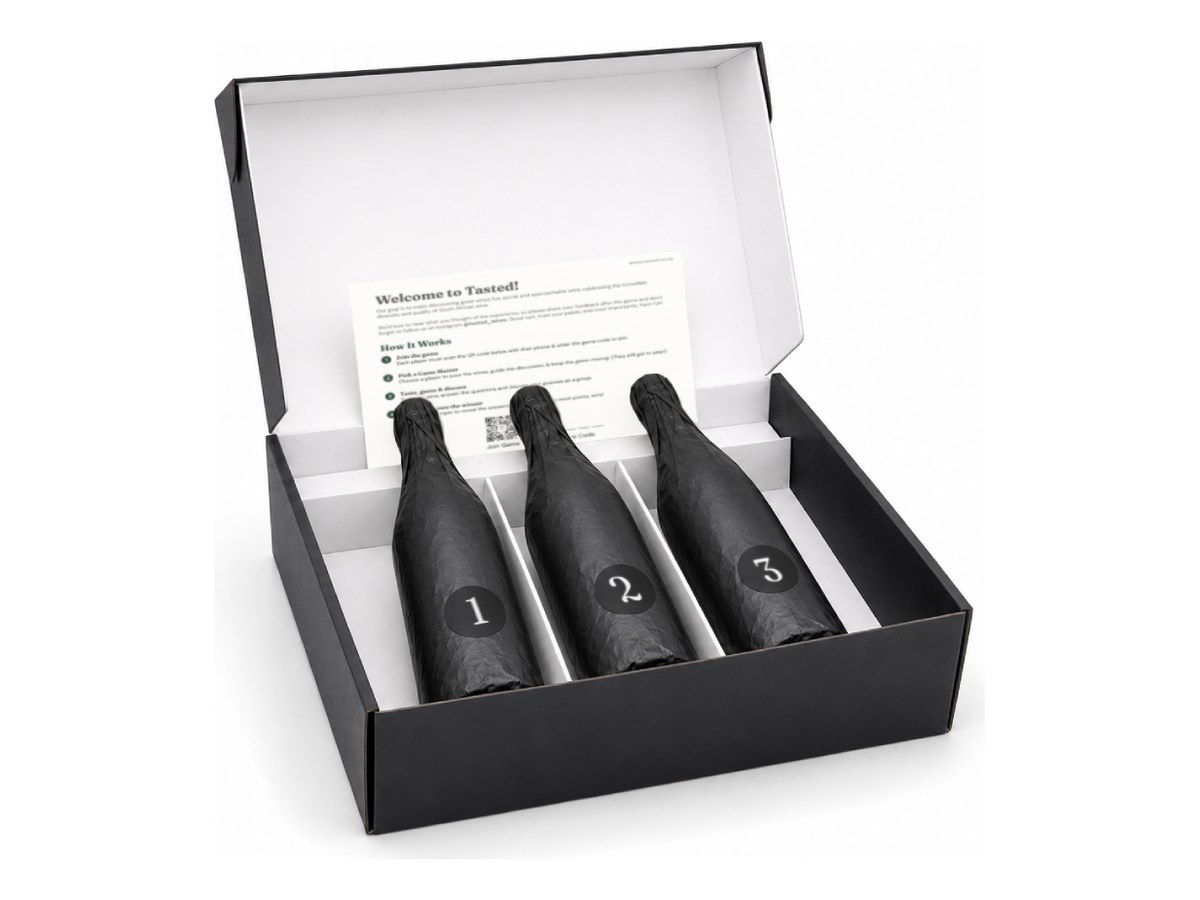
People recognise bottles by more than the label. Take the foil or wax off the neck, then cover the whole bottle: a paper bag, a sock, a numbered tasting bag, or a wrap of foil. Number each one and write the answers down somewhere the players cannot see. Do it before anyone arrives.
The host is allowed to know. If you would rather play too, that is what a box is for: the wines arrive sealed and numbered, and nobody at the table has seen a label.
3. Serve them right
Whites go in the fridge 20 to 30 minutes before you start. Reds are best just below room temperature; on a hot evening, that means a short spell in the fridge too. Taste light to heavy, whites before reds and lighter reds before big ones, so the first glass does not flatten the second.
One glass per person is fine. A sip of water between wines resets the palate. A tasting pour is small, which is how one bottle stretches to around 15 people.
4. Ask the same questions every round
Give everyone the same short list, so the guesses can be compared. The Tasted game asks about colour, smell, taste, grape, vintage, region and price. On paper, that is a scorecard with seven lines per bottle.
If your table is new to this, three questions are enough:
- Does it smell like a fruit you know? Name it.
- Does it feel light or heavy in your mouth? Skim milk or full cream?
- Does it make your mouth water, like lemon, or feel dry, like strong tea?
Let people talk before they commit. The argument is the fun part.
5. Wine words, in plain English
Nobody needs the jargon, but five words come up every time. Here is what they mean.
- Tannin
- The dry, grippy feeling on your gums, like tea left too long in the mug. Big reds have more of it.
- Body
- How heavy the wine feels in your mouth, from skim milk to full cream.
- Acidity
- The fresh, mouth-watering zing, like biting a green apple.
- Dry
- Not sweet. Most reds and most whites are dry.
- Finish
- How long the taste hangs around after you swallow.
6. Score it and reveal
One point per correct answer, per wine. Reveal one bottle at a time, and let the table argue before the bag comes off. Keep a running total and crown a winner at the end. The prize is bragging rights, unless you organised one.
If a phone is doing the scoring, the reveal is where it earns its keep: every guess is locked before the label shows, so nobody can quietly change their mind.
Or skip the prep: the box does the hiding
A Tasted box is the blind tasting with the admin done. Sealed, numbered mystery wines, the scorecards and the join card come in the box. Everyone joins the game on their own phone with a code, no app to download, and the reveal, the scoring and the winner happen on screen. The Discovery Box has two wines, the Premium and Reserve boxes have three, and one box hosts up to 15 tasters. Boxes start at R365. Delivery is R65 across South Africa, free on orders over R600.
Not sure what you like? The quiz is six questions and points you to a South African bottle you would never have picked yourself.
Organising it for a team? The team building guide covers boxes per head count, cost per person and what to set up at the office.
Questions hosts ask
How many wines do you need for a blind tasting?
Two or three. Each bottle is a round of about 20 minutes, so three bottles is roughly an hour of play. Most guides stop at four to six, because palates tire.
How many people can taste from one bottle?
A tasting pour is small, so one bottle stretches to around 15 people. For a bigger crowd, open a second set of the same wines so every table plays the same game.
Do I need to know wine to host a blind tasting?
No. The host pours, keeps the pace and plays along. Nobody sees a label until the reveal, so a beginner and an expert start level.
How long does a blind tasting take?
About 20 minutes per bottle. Two bottles is a relaxed 45 minutes, three is closer to an hour, and plenty of tables stretch it across dinner.
Should the wines be chilled?
Whites, yes: 20 to 30 minutes in the fridge before you start. Reds are best just below room temperature.
Does a blind tasting work for team building?
Yes. It needs no facilitator and no venue, everyone plays on their own phone, and hiding the labels levels the room. For larger groups, pair boxes and ask about team pricing.